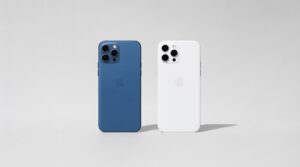
Choosing a smartphone in 2026 is harder than ever — not because phones are bad, but because they’re all good. A $400 phone delivers 90% of the experience of a $1,200 flagship. The differences that matter are subtle, and most marketing focuses on specs that don’t affect your daily experience.
This guide cuts through the noise. We’ll tell you what actually matters (camera quality, battery life, software support) and what doesn’t (megapixel count, RAM over 8GB, benchmark scores).
What Actually Matters
When choosing a smartphone, these five factors determine your daily experience:
1. Camera Quality (Not Megapixels)
A 50MP phone with great software processing takes better photos than a 200MP phone with mediocre processing. Look at real-world photo comparisons, not megapixel counts. The best camera phones all have excellent computational photography — that’s what makes the difference.
2. Battery Life
Look for real-world screen-on time, not mAh numbers. A phone with a 4,000mAh battery and efficient chip can outlast a phone with a 5,500mAh battery and a power-hungry display. Target 8+ hours screen-on time for a full day of use.
3. Software Support Duration
This is the most overlooked factor. A phone that stops getting updates after 2 years becomes a security risk. Google and Samsung now offer 7 years of updates. Apple offers 6 years. Budget phones often offer only 2-3 years. This affects how long your phone stays safe and functional.
4. Display Quality
You look at your phone screen 4+ hours per day. An OLED display with 120Hz refresh rate is the minimum for a good experience in 2026. Don’t buy a phone with an LCD display above $250.
5. Storage (Not RAM)
128GB is the minimum in 2026. 256GB if you take lots of photos or install many apps. 512GB+ only if you shoot 4K video regularly or store offline media. RAM above 8GB makes no noticeable difference for most users.
What Doesn’t Matter
These specs are used in marketing but have minimal impact on daily use:
Megapixel Count
A 200MP camera doesn’t take 4x better photos than a 50MP camera. Megapixels measure resolution, not quality. The Pixel 9a ($500) with a 64MP sensor takes better photos than most 200MP phones because Google’s computational photography is superior.
RAM Over 8GB
8GB RAM is sufficient for 99% of users. 12GB and 16GB make no noticeable difference in daily use — apps don’t use more RAM just because it’s available. Only gamers running multiple heavy apps simultaneously benefit from 12GB+.
Benchmark Scores
Geekbench and AnTuTu scores don’t reflect real-world performance. A phone that scores 20% higher on benchmarks feels identical in daily use. The only time benchmarks matter is for heavy gaming or video editing.
Processor Names
“Snapdragon 8 Elite Gen 2” vs “A19 Pro” vs “Tensor G6” — these names tell you nothing about real-world speed. All flagship processors in 2026 are fast enough for every normal task. The differences only matter for gaming and professional use.
Charging Speed Above 30W
30W charging fills a phone in about 60 minutes. 100W charging fills it in 25 minutes. Both are fast enough. The difference between 30W and 100W is 35 minutes — not worth paying extra for or choosing a phone based on.
Camera: How to Evaluate
The Only Camera Specs That Matter
- Main sensor size: Larger sensors capture more light. 1/1.3″ or larger is flagship quality.
- OIS (Optical Image Stabilization): Essential for sharp photos and smooth video. Non-negotiable above $300.
- Telephoto lens: Only matters if you use zoom. A 3x-5x optical telephoto is ideal. Digital zoom above 10x is always poor.
- Ultrawide: Nice to have, but most people use it less than 10% of the time.
How to Test a Phone Camera
- Take a photo in good lighting — any phone should look good
- Take a photo in dim indoor lighting — this separates good from bad
- Take a photo at night — this separates great from good
- Take a portrait photo — check edge detection around hair
- Take a 5x zoom photo — check if it’s optical or digital
If a phone passes all 5 tests, the camera is good enough for 95% of people. See our best camera phone guide for specific recommendations.
Battery: Real-World Expectations
Battery Life by Phone Class
| Phone Class | Screen-on Time | Real-World Battery |
|---|---|---|
| Budget ($200-350) | 6-8 hours | Full day with light use |
| Mid-range ($350-700) | 8-10 hours | Full day with moderate use |
| Flagship ($800+) | 10-14 hours | Full day+ with heavy use |
| Battery champion | 14-18 hours | 2 days with moderate use |
Battery Tips
- Don’t charge to 100% every night — keep it between 20-80% for longer battery health
- Don’t worry about overnight charging — modern phones have smart charging that stops at 80% and finishes before you wake up
- Replace your battery when it drops below 80% health — usually after 2-3 years
- Dark mode saves battery on OLED displays — 10-20% improvement on AMOLED screens
Software Support: The Hidden Cost
Update Support by Brand (2026)
| Brand | OS Updates | Security Patches | Example |
|---|---|---|---|
| 7 years | 7 years | Pixel 9a → Android 23 (2033) | |
| Samsung | 7 years | 7 years | Galaxy S26 → Android 23 (2033) |
| Apple | 6 years | 6+ years | iPhone 17 → iOS 25 (2032) |
| OnePlus | 4 years | 5 years | OnePlus 14 → Android 20 (2030) |
| Motorola | 2 years | 3 years | Moto G Power → Android 18 (2028) |
| Xiaomi | 2 years | 3 years | Redmi Note 14 Pro → Android 18 (2028) |
Why This Matters
A phone that stops getting security updates becomes vulnerable to exploits. If you keep your phone for 3+ years, buy Google, Samsung, or Apple — they support their phones for 6-7 years. If you upgrade every 2 years, any brand is fine.
Display: What You Need to Know
Minimum Specs for 2026
- OLED/AMOLED: Required above $250. LCD is acceptable only on phones under $200.
- 120Hz refresh rate: Required above $300. 90Hz is acceptable at $200-300. 60Hz is unacceptable in 2026.
- FHD+ resolution (1080p): Minimum. QHD is nice but not necessary — most people can’t tell the difference on a phone screen.
- Brightness: 1,000+ nits peak for outdoor visibility. 2,000+ nits is flagship-level.
What You Don’t Need
- QHD resolution: FHD+ is sharp enough on a 6-7″ screen. QHD drains battery faster for minimal visual benefit.
- Curved edges: Look cool, cause accidental touches, and are expensive to replace if the screen cracks.
- LTPO (variable refresh): Saves battery but costs more. Nice-to-have, not necessary.
Budget vs Flagship: Where to Save
Where Budget Phones Are Good Enough
- Display: $400 phones have OLED 120Hz displays — same tech as flagships
- Performance: $400 phones are fast enough for 95% of tasks (social media, browsing, photos, light gaming)
- Software: Google and Samsung budget phones get 5-7 years of updates
- Battery: Budget phones often have better battery life than flagships (smaller displays, less power-hungry chips)
Where Flagships Are Worth the Money
- Camera zoom: Optical telephoto lenses only exist on $800+ phones
- Video quality: 4K60 Dolby Vision, ProRes, and cinematic mode are flagship-only
- Build quality: Glass/metal vs plastic, IP68 vs IP67, better haptics
- Performance: Only matters for heavy gaming or professional video editing
The Sweet Spot
$400-700 is the sweet spot for most people. Phones like the Pixel 9a ($500), Galaxy A56 ($350), and OnePlus 14 ($700) deliver 90% of the flagship experience for 40-60% of the price. The extra $500-800 for a flagship buys you a better camera zoom and premium materials — not a fundamentally different experience.
Buying Checklist
Before you buy a phone, verify these minimums:
- ✅ OLED/AMOLED display (not LCD above $250)
- ✅ 120Hz refresh rate (not 60Hz above $300)
- ✅ 128GB storage minimum (256GB preferred)
- ✅ 6GB RAM minimum (8GB preferred)
- ✅ OIS on main camera (not EIS)
- ✅ IP67 or better water resistance
- ✅ 3+ years of software updates (5+ preferred)
- ✅ NFC for contactless payments
- ✅ USB-C (not Micro-USB)
Red Flags
- ❌ Less than 2 years of software support
- ❌ No NFC (can’t use Google Pay / Apple Pay)
- ❌ LCD display above $250
- ❌ 60Hz refresh rate above $300
- ❌ 32GB storage (unusable in 2026)
- ❌ No fingerprint or face unlock
Frequently Asked Questions
How much should I spend on a smartphone in 2026?
$400-700 for most people. Phones like the Pixel 9a ($500), Galaxy A56 ($350), and OnePlus 14 ($700) deliver 90% of the flagship experience. Only spend $1,000+ if you need a telephoto camera, premium build, or the fastest performance.
How long do smartphones last in 2026?
5-7 years for flagships (Google and Samsung promise 7 years, Apple 6 years). 3-4 years for mid-range. 2 years for budget. Battery degradation is the main limit — replace the battery after 2-3 years and the phone lasts much longer.
Is 128GB storage enough in 2026?
Yes, for most people. 128GB holds ~30,000 photos or ~30 apps + media. Get 256GB if you shoot 4K video regularly, download lots of offline media, or install many large games. 512GB+ is only for power users.
Should I buy last year’s flagship or this year’s mid-range?
Last year’s flagship is usually better. A Galaxy S25 ($700 used) has a better camera, display, and build than a Galaxy A56 ($350 new). The mid-range catches up in 2-3 areas (battery, display) but loses in 5-6 (camera, build, performance, updates).
Conclusion
When choosing a smartphone in 2026, focus on camera quality, battery life, and software support — not megapixels, RAM, or benchmark scores. A $500 phone with good software and a great camera will serve you better than a $1,200 phone with specs you’ll never use.
Start with our best smartphone guide for specific recommendations, or use the buying checklist above to evaluate any phone.
Continue reading:
Further reading: How to Set Up Sleep Schedules in iOS, How to Edit Fitness Goals on Your Apple Watch and iPhone.