Instant Cameras Are Having a Moment
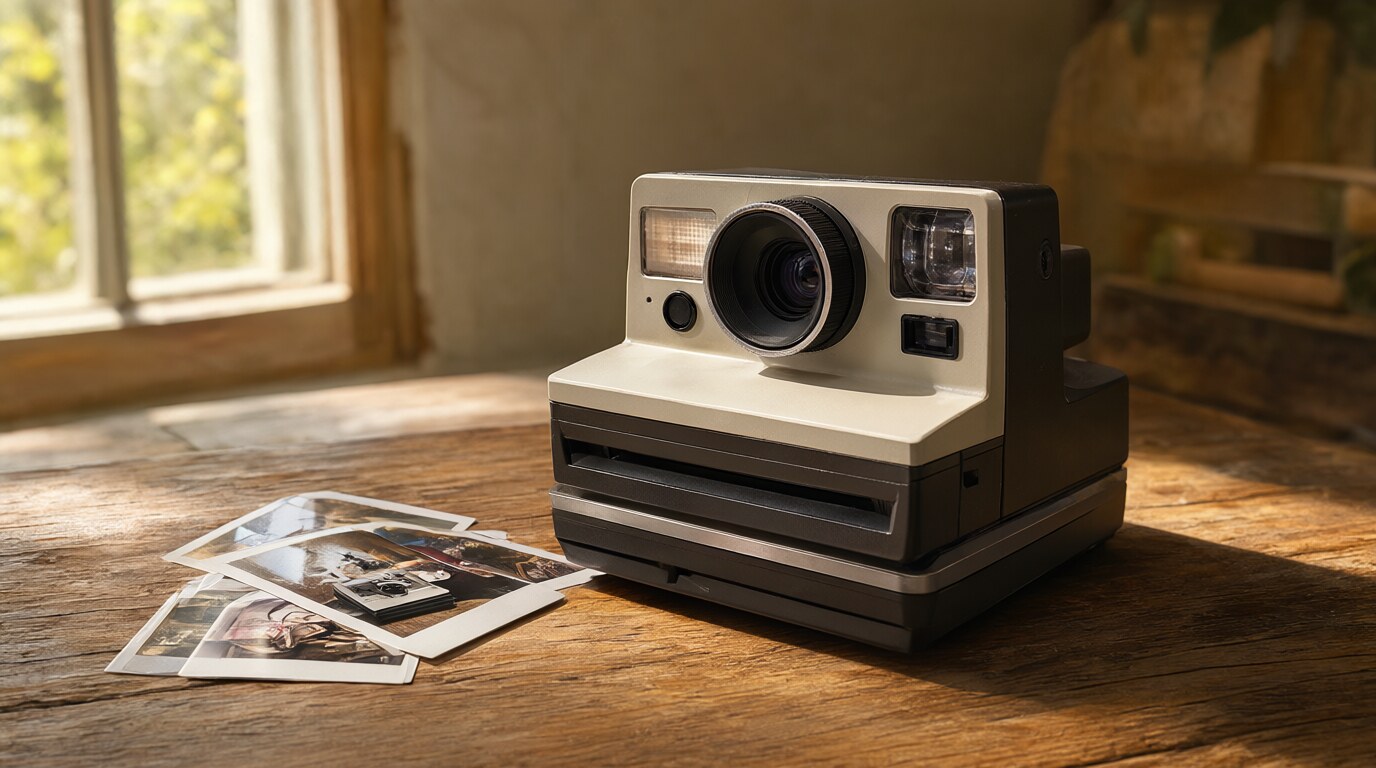
Instant cameras have been resurging for years, and it’s not nostalgia — it’s because physical photos are different from digital ones. You hand someone a print and it goes on their fridge, in their wallet, on their wall. It’s a real object, not a file on a phone. The trade-off is cost: film isn’t cheap, and every photo you take is a dollar or two. Here are the best options.
Fujifilm Instax Mini 12 — Best for Beginners
The Mini 12 is the camera most people should start with. It’s cheap ($70-80), simple (point and shoot — no settings to worry about), and the film is widely available. The photos are credit-card sized with a white border — the classic Instax look. Film costs about $0.80-1.00 per photo depending on how you buy it (bulk packs are cheaper).
The Mini 12 improved over the Mini 11 with a brighter flash, a parallax-corrected viewfinder (what you see is closer to what you get), and a slightly more ergonomic design. It doesn’t do close-up shots well without the included close-up lens adapter, and the image quality is soft — but that’s the Instax aesthetic. It’s not trying to be sharp. It’s trying to be fun.
Fujifilm Instax Wide 400 — Best for Group Photos
The Wide 400 uses Instax Wide film, which is roughly double the area of Mini film. This makes it the best choice for group photos, landscapes, and any situation where you want more detail in a larger print. The camera itself is bigger and less pocketable than the Mini, but the photos look noticeably better at larger sizes. Film costs about $1.20-1.50 per photo.
The Wide 400 has a clean, minimal design with a manual focus zone setting (0.9-3m or 3m+). It’s less automatic than the Mini 12 — you choose the focus zone — but the results are worth the small extra effort.
Polaroid Now+ — Best for Creative Control
The Now+ connects to the Polaroid app via Bluetooth, giving you creative tools that other instant cameras don’t have: light painting, double exposure, manual mode, and noise triggers (the camera takes a photo when it hears a sound). The app also lets you adjust aperture and shutter speed. It’s the closest thing to a “pro” instant camera.
Polaroid i-Type film produces larger, more square prints than Instax. The image quality is warmer and softer — more “vintage” than Instax’s brighter, punchier colors. Film is more expensive: $1.50-2.00 per photo. The Now+ also uses i-Type film (no battery in the cartridge), which is slightly cheaper than 600 film.
Lomo’Instant Automat — Best for Experimentation
Lomography’s instant camera is for people who want to play. It has multiple shooting modes (automatic, bulb/long exposure, multiple exposure), built-in color gels for the flash, and splitzer attachments for half-frame shots. The results are unpredictable — sometimes beautiful, sometimes a mess. That’s the point. It uses Instax Mini film, so costs are the same as the Mini 12.
Film Cost Comparison
Before buying any instant camera, look at the ongoing film cost. Over a year of casual shooting (2-3 photos per week), you’ll spend more on film than on the camera:
- Instax Mini: ~$0.80-1.00/photo → $80-150/year
- Instax Wide: ~$1.20-1.50/photo → $125-235/year
- Polaroid i-Type: ~$1.50-2.00/photo → $150-300/year
Buy film in bulk packs (twin packs or 100-sheet boxes) to get the per-photo cost down. Never buy single packs at retail markup.