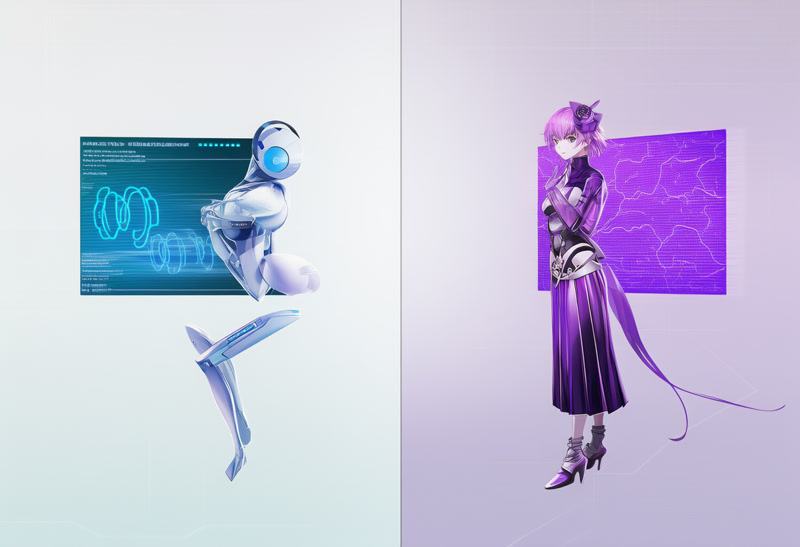
With Fable 5 now banned worldwide, users are scrambling for alternatives — and the ChatGPT 5.5 vs Opus 4.8 comparison has become the most important decision in AI. OpenAI’s GPT-5.5 and Anthropic’s Claude Opus 4.8 are the two frontrunners. Both launched within weeks of each other in spring 2026, both claim state-of-the-art coding capabilities, and both are vying to fill the void left by the sudden shutdown of Anthropic’s most powerful models.
In this ChatGPT 5.5 vs Opus 4.8 comparison, we break down benchmarks, coding quality, pricing, and real-world usability to help you decide which model deserves your attention — and your budget — in 2026.
Bookmark this guide and share it with your team, because this decision matters more than ever.
ChatGPT 5.5 vs Opus 4.8 — At a Glance
Before we dive into the details, here is a side-by-side overview of how these two flagship models compare on paper. The table below summarises the key specifications, benchmarks, and pricing that matter most to developers and teams evaluating their options in mid-2026.
| Specification | ChatGPT 5.5 (GPT-5.5) | Claude Opus 4.8 |
|---|---|---|
| Developer | OpenAI | Anthropic |
| Release Date | April 23, 2026 | May 28, 2026 |
| Context Window | 1,050,000 tokens (API) | 1,000,000 tokens |
| Max Output Tokens | 128,000 | Not separately capped |
| SWE-bench Verified | 88.7% | 88.6% |
| SWE-bench Pro | 58.6% | 69.2% |
| Terminal-Bench | 82.7% (v2.0) | 74.6% (v2.1) |
| GDPval Elo | 1,769 | 1,890 |
| MMLU | 92.4% | Not separately reported |
| API Input (per 1M tokens) | $5.00 | $5.00 |
| API Output (per 1M tokens) | $30.00 | $25.00 |
| Multimodal Input | Text, Image, Audio, Video | Text, Image (no audio/video) |
| Fast Mode | Not available | 2.5x speed at $10/$50 per 1M |
As the table makes clear, the ChatGPT 5.5 vs Opus 4.8 contest is not a simple blowout. Each model leads in different areas — and the right choice depends heavily on what you need it for.
ChatGPT 5.5 — What’s New and What It Does Best
Released on April 23, 2026, GPT-5.5 (internally codenamed “Spud”) represents the single biggest frontier step since the original GPT-5 launch. OpenAI retrained the base model from scratch — the first full retrain since GPT-4.5 — and the results are significant.
The headline improvements are substantial: a 60% reduction in hallucinations compared to GPT-5.4, roughly 40% fewer output tokens needed for the same tasks, and a 1M-token context window in the API (up from 256K in GPT-5.4). These are not incremental tweaks — they fundamentally change how the model performs in production.
On the coding front, GPT-5.5 claims the top spot on Terminal-Bench 2.0 at 82.7% and hits 88.7% on SWE-bench Verified, according to OpenAI’s official announcement. In our experience and in user reports, ChatGPT 5.5 is surprisingly good at complex backend tasks — infrastructure code, database schemas, API design, and multi-service orchestration. Its deep integration with the Codex CLI makes it the go-to choice for terminal-driven, agentic coding workflows.
The model also ships with native omnimodality — text, image, audio, and video input — making it the most versatile multimodal option in this comparison. If your workflow involves processing audio recordings or video frames alongside text, GPT-5.5 is the only model here that handles it natively.
However, GPT-5.5 is not without controversy. The May 2026 “fake thinking” scandal — where users discovered OpenAI was silently downgrading model quality without announcement — has eroded trust. Combined with a 2x price increase over GPT-5.4 and no fast mode option, GPT-5.5 asks for more money while demanding more faith.
For a broader look at how GPT-5.5 stacks up against other models, see our GPT-5.4 vs Claude 4.6 vs Gemini 3.1 comparison.
Claude Opus 4.8 — The Builder’s Model
Launched on May 28, 2026 — just two weeks before the Fable 5 ban — Claude Opus 4.8 arrived at a critical moment. As Anthropic’s announcement details, it brought meaningful upgrades over Opus 4.7: SWE-bench Pro jumped from 64.3% to 69.2%, GDPval Elo surged from 1,753 to 1,890, and the model uses 35% fewer output tokens per task while being 4x more honest about flawed code.
But what truly sets Opus 4.8 apart is its reputation among developers as the ultimate builder model. It delivers premium front-end code quality — clean, well-structured, production-ready UI code — while maintaining solid back-end capabilities. This is not just a benchmark claim; it is consistently reported by real users who have put both models through their paces on real projects.
The honesty improvement deserves special attention. Opus 4.8 is four times less likely than its predecessor to let flawed code pass unremarked. It proactively identifies uncertainties, pushes back on unsound plans, and flags edge cases. In a landscape where AI-generated bugs can cascade through production systems, this is not a nice-to-have — it is a critical safety feature.
Opus 4.8 also introduces a game-changing Fast Mode: 2.5x faster output at $10/$50 per 1M tokens, which is 3x cheaper than the previous fast mode pricing. Same model, same quality — you are paying for speed only. This makes Opus 4.8 viable for latency-sensitive production workloads that were previously the domain of smaller, less capable models.
Other notable features include dynamic workflows with parallel subagents in Claude Code, effort controls (Low/Medium/High/XHigh/Max) that let you tune compute per task, and near-Mythos-level alignment that bridges the capability gap to the now-banned Mythos 5. For teams concerned about AI safety and cybersecurity, this alignment is a meaningful differentiator.
The weaknesses? No native audio or video input, a Terminal-Bench score that trails GPT-5.5, and a default effort level that some users find underwhelming — you need to tune effort settings for best results. But for serious software engineering, Opus 4.8 is the model to beat. Learn more in our AI Model Showdown article.
Benchmark Showdown — Who Wins Where?
Benchmarks do not tell the whole story, but they provide a crucial starting point. Here is how ChatGPT 5.5 vs Opus 4.8 compares across the most relevant benchmarks for developers and technical teams in 2026.
| Benchmark | GPT-5.5 | Opus 4.8 | Winner |
|---|---|---|---|
| SWE-bench Verified | 88.7% | 88.6% | Essentially tied |
| SWE-bench Pro | 58.6% | 69.2% | Opus 4.8 (+10.6pp) |
| Terminal-Bench | 82.7% (v2.0) | 74.6% (v2.1) | GPT-5.5 (+8.1pp) |
| GDPval Elo | 1,769 | 1,890 | Opus 4.8 (+121) |
| MMLU | 92.4% | ~72-74% (est.) | GPT-5.5 |
| OSWorld Verified | SOTA (unconfirmed) | 83.4% | Unconfirmed |
| BenchLM | 89 | 93 | Opus 4.8 |
| Artificial Analysis Index | 60 | N/A | GPT-5.5 (no comparison) |
The pattern is clear: GPT-5.5 dominates terminal-based agentic coding (Terminal-Bench) and general knowledge (MMLU), while Opus 4.8 dominates real-world software engineering (SWE-bench Pro) and practical reasoning (GDPval). The SWE-bench Pro gap is particularly telling — at 69.2% vs 58.6%, Opus 4.8 holds a 10.6 percentage point lead on the benchmark that best simulates actual repo-scale bug fixing and feature development.
The GDPval Elo gap of 121 points is equally significant. This benchmark measures practical, multidisciplinary reasoning — the kind of problem-solving that matters in real work, not just in exam conditions. Opus 4.8’s lead here confirms what users report: it is better at thinking through complex, multi-step problems and identifying when something does not add up.
For developers prioritising raw terminal throughput and CLI-driven workflows, GPT-5.5’s Terminal-Bench lead of 8.1 percentage points makes it the stronger choice. But for teams doing serious software engineering — code review, bug resolution, architectural decisions — Opus 4.8’s benchmark dominance is hard to ignore.
Coding Quality — Backend vs Frontend
Benchmarks measure one thing; real-world code quality measures another. In our analysis of the ChatGPT 5.5 vs Opus 4.8 coding experience, the picture depends heavily on what you are building.
Backend and Infrastructure Code
GPT-5.5 excels at complex backend tasks. Its Terminal-Bench 2.0 leadership at 82.7% reflects a model that is deeply optimised for terminal-first, agentic coding workflows. Through Codex CLI integration, GPT-5.5 can plan, execute, and iterate on backend infrastructure tasks — database migrations, API endpoint scaffolding, service mesh configuration — with impressive reliability.
That said, Opus 4.8 is no slouch on the backend. Its SWE-bench Pro lead demonstrates strong performance on real-world repository-scale tasks, and its 4x honesty improvement means it is far more likely to flag potential issues before they become production incidents. For teams that value correctness over speed, Opus 4.8’s willingness to push back on unsound plans is invaluable.
Frontend and UI Code
This is where Opus 4.8 pulls ahead decisively. It is widely regarded as the best model for front-end code quality — producing clean, well-structured, production-ready UI code in React, CSS, and modern JavaScript frameworks. GPT-5.5 produces adequate front-end output, but multiple user reports indicate it trails Opus 4.8 in terms of code cleanliness, component structure, and attention to responsive design details.
The verdict is straightforward: for terminal-based agentic coding, GPT-5.5 leads. For repo-scale software engineering and front-end quality, Opus 4.8 leads. Teams doing full-stack work may find that using both models — Opus 4.8 for front-end and review, GPT-5.5 for rapid backend prototyping — delivers the best results.
Pricing and Value — Which Model Saves You More?
Pricing is where the ChatGPT 5.5 vs Opus 4.8 comparison gets genuinely interesting. On paper, the differences look modest. In practice, they compound significantly.
| Pricing Dimension | GPT-5.5 | Opus 4.8 |
|---|---|---|
| API Input (per 1M tokens) | $5.00 | $5.00 |
| API Output (per 1M tokens) | $30.00 | $25.00 |
| Cached Input (per 1M tokens) | $0.50 | Up to 90% savings |
| Fast Mode | Not available | $10/$50 per 1M (2.5x speed) |
| Batch Discount | 50% off standard | 50% off standard |
| ChatGPT Plus / Claude Pro | $20/month | $20/month |
| Top-Tier Plan | $200/month (Pro) | $200/month (Max 20x) |
At the API level, input pricing is identical at $5.00 per 1M tokens. The difference comes on output: Opus 4.8 charges $25.00 per 1M output tokens compared to GPT-5.5’s $30.00 — a 17% saving per token. But the real story is effective cost per task.
Opus 4.8 uses 35% fewer output tokens per task than its predecessor (Opus 4.7) at the same list price, making it effectively cheaper per completed task. GPT-5.5 also improved token efficiency by roughly 40% over GPT-5.4, but its list price doubled — from $2.50/$15 to $5.00/$30. The net result is that Opus 4.8 offers better value per task for most coding workloads.
There is a catch with GPT-5.5’s context window: prompts above 272K tokens trigger higher pricing for the entire session. Opus 4.8 offers its full 1M context at standard pricing with no tiered surcharges. For teams working with large codebases, this pricing difference can be substantial.
Opus 4.8’s Fast Mode at $10/$50 per 1M tokens — 2.5x faster output at 3x cheaper than the previous fast mode — makes it viable for latency-sensitive production workloads. GPT-5.5 has no equivalent option.
After Fable 5 — Why This Comparison Matters Now
On June 12, 2026, the US Commerce Department issued an emergency export control directive ordering Anthropic to suspend all access to Claude Fable 5 and Claude Mythos 5. The directive, triggered by national security concerns over Mythos 5’s capabilities as a “superhacker” AI, effectively shut down both models worldwide — not just for foreign nationals, but for all users, because Anthropic could not technically restrict access by nationality.
The impact was immediate and severe. Teams that had integrated Fable 5 into their workflows were left without their most capable model overnight. Our coverage of the Fable 5 ban details the full timeline and implications, but the bottom line is this: if you were relying on Fable 5 or Mythos 5, you need an alternative right now.
This is precisely why the ChatGPT 5.5 vs Opus 4.8 comparison matters so much in June 2026. These are the two most capable models still available, and they represent fundamentally different philosophies:
- GPT-5.5 is the speed-and-scale play — massive context window, native multimodality, deep Codex integration, and the OpenAI ecosystem behind it. Users needing terminal-based agentic coding and multimodal input are migrating here.
- Opus 4.8 is the precision-and-honesty play — best-in-class SWE-bench Pro, 4x more honest about flawed code, near-Mythos-level alignment, and better value per task. Full-stack developers and teams doing code review are migrating here.
Opus 4.8’s positioning as “near-Mythos-level alignment” is no accident. Anthropic clearly anticipated regulatory pressure and built a compliant alternative that retains most of the capability. For teams navigating the EU AI Act compliance landscape, Opus 4.8’s alignment credentials and Anthropic’s default no-training-on-customer-data policy offer additional peace of mind.
Which Model Should You Choose?
There is no single right answer in the ChatGPT 5.5 vs Opus 4.8 debate — but there are clear recommendations based on your use case.
| Use Case | Recommended Model | Why |
|---|---|---|
| Terminal-based agentic coding (Codex) | GPT-5.5 | Best Terminal-Bench score, deep Codex CLI integration |
| Repo-scale software engineering / bug fixing | Opus 4.8 | Best SWE-bench Pro score, 4x more honest about flaws |
| Front-end development (React, CSS, UI) | Opus 4.8 | Widely regarded as producing better front-end code |
| Back-end development (APIs, databases, infra) | Tie | GPT-5.5 excels at complex backend tasks; Opus 4.8 is more honest about edge cases |
| Large codebase analysis (1M+ context) | GPT-5.5 | Slightly larger context window (1.05M vs 1M) |
| Latency-sensitive production workloads | Opus 4.8 (Fast Mode) | 2.5x faster output at reasonable premium |
| Mathematical reasoning | GPT-5.5 | FrontierMath SOTA performance |
| Practical reasoning / knowledge work | Opus 4.8 | GDPval Elo 1,890, best-in-class |
| Budget-conscious API usage | Opus 4.8 | $5 less per 1M output tokens, 35% fewer tokens per task |
| Multimodal (audio/video input) | GPT-5.5 | Native omnimodal input; Opus 4.8 lacks audio/video |
| Privacy-sensitive workloads | Opus 4.8 | Anthropic does not use API data for training by default |
For most developers and teams in mid-2026, we recommend starting with Opus 4.8 as the primary model — its combination of superior SWE-bench Pro performance, honesty improvements, and better per-task value makes it the stronger all-round choice for software engineering. However, if your workflow is heavily terminal-driven or requires multimodal input, GPT-5.5 is the better fit. And for teams with the budget, using both models in tandem — Opus 4.8 for code review and front-end work, GPT-5.5 for rapid backend prototyping and multimodal tasks — delivers the best of both worlds.
Frequently Asked Questions
Is ChatGPT 5.5 better than Claude Opus 4.8 for coding?
It depends on the type of coding. GPT-5.5 leads on Terminal-Bench (82.7% vs 74.6%) and is the best choice for terminal-based, agentic coding workflows via Codex. However, Opus 4.8 leads on SWE-bench Pro (69.2% vs 58.6%), which measures real-world repo-scale software engineering. For front-end code quality and code review, Opus 4.8 is the stronger model. For backend infrastructure tasks, both perform well, though GPT-5.5 has an edge in terminal-driven workflows.
Why was Fable 5 banned and how does it affect this comparison?
On June 12, 2026, the US Commerce Department issued an emergency export control directive banning Fable 5 and Mythos 5 due to national security concerns. Mythos 5 was classified as a cybersecurity risk. Since Anthropic could not restrict access by nationality, both models were shut down worldwide. This makes the ChatGPT 5.5 vs Opus 4.8 comparison far more urgent — these are now the two most capable models available, and teams formerly using Fable 5 or Mythos 5 must choose between them.
Which model is cheaper to use — GPT-5.5 or Opus 4.8?
Opus 4.8 is cheaper for most workloads. While both charge $5.00 per 1M input tokens, Opus 4.8 charges $25.00 per 1M output tokens versus GPT-5.5’s $30.00. More importantly, Opus 4.8 uses approximately 35% fewer output tokens per task, making its effective cost per completed task significantly lower. GPT-5.5 also imposes higher pricing for prompts above 272K tokens, while Opus 4.8 offers its full 1M context at standard rates.
Can Opus 4.8 replace Mythos 5 or Fable 5?
Opus 4.8 is positioned as having “near-Mythos-level alignment,” meaning it bridges much of the capability gap left by the banned models. For most software engineering and reasoning tasks, Opus 4.8 is a strong replacement. However, Fable 5 was specifically tuned for creative tasks, and Opus 4.8’s creative writing capabilities are not significantly improved over Opus 4.7. Teams that relied on Fable 5 for creative work may find neither GPT-5.5 nor Opus 4.8 fully replicates that experience.
Should I use GPT-5.5 or Opus 4.8 for production workloads?
For latency-sensitive production workloads, Opus 4.8 with Fast Mode is the better choice — it offers 2.5x faster output at $10/$50 per 1M tokens, which is 3x cheaper than the previous fast mode pricing. GPT-5.5 has no fast mode option. For production workloads where latency is less critical, Opus 4.8’s honesty improvements (4x less likely to let flawed code pass) provide an additional safety margin that is valuable in production environments.
Conclusion
The ChatGPT 5.5 vs Opus 4.8 comparison in 2026 is not about which model is universally better — it is about which model is better for your specific needs. GPT-5.5 dominates terminal-based agentic coding, offers the largest context window, and provides native multimodal input. Opus 4.8 leads in real-world software engineering, practical reasoning, front-end code quality, and per-task value.
In a post-Fable 5 world, both models are essential options. But for most developers and teams, we believe Opus 4.8’s combination of superior SWE-bench Pro performance, 4x honesty improvement, better pricing, and near-Mythos-level alignment makes it the stronger primary choice for software engineering in mid-2026.
For more AI comparisons and guides, explore these related articles:
- GPT-5.4 vs Claude 4.6 vs Gemini 3.1 — 2026 Comparison
- Claude Fable 5 Ban: Worldwide AI Model Shutdown
- AI Model Showdown: Claude Mythos 5 vs GPT-5.4 vs Gemini 3.1 Pro
- EU AI Act 2026 Compliance Guide for Business
- Cybersecurity Threats 2026: How to Protect Yourself